It’s All About Getting Noticed

book girlPublishing my first novel was one of the most important moments in my life.  It signified the fulfilment of a life-long dream.  I had climbed the mountain and reached the top.  Like many newly published writers, I was floating in a cloud of euphoria – convinced that everyone would love my story.   I’m sure you can understand my frustration when the hallowed halls that is Amazon barely registered an echo of my arrival.  At first, I visited my KDP dashboard daily – monitoring my sales.  In all honesty, there wasn’t many and most of those were probably from people in my local area – family, friends, etc.   When my dream of overnight success didn’t come true, I finally grasped the reality of my situation.  It didn’t matter how wonderful I thought my story was – I lacked name recognition.   My author platform was probably more akin to a board and a couple of nails.

Marketing Madness:  Yes.  I became infected.  I scoured various blogs looking for marketing advice.  I was the snake oil salesman’s dream.  If you offered me the cure for my lagging sales, I was buying!   I tried this.  I tried that.  I tried the other thing, too.  For all that effort, I did learn something:   As a newly published writer, I was picking my way through uncharted territory.  After trying various marketing tips, I realized that there is no “one size fits all” plan.

There were things I did that helped.  I went on tour (blog tours) as well as listing my book on some promotional sites.  Some worked better than others.  My e-book sales increased.  However, 70% of $2.99 isn’t all that much.  Multiply that by a few sales and my net profit still wasn’t anything to write home about.

While e-books are great, having a physical book to sell has its own benefits.  One of those being the ability to remove the middle man thereby increasing the profit margin.  Local festivals are a great venue for selling books.   I try to choose events that I feel are “book friendly.”  I consider the cost of the table – as in how many books I need to sell to break even.  I also consider the average number of people who will attend the festival.  Even if I don’t make a sale, being seen and getting my name out has its own value.   It’s like purchasing advertising.   Let’s say that an event draws 5,000 people and a space at that event goes for $100.00 – that breaks down to an advertising cost of 2¢ per person.

Not everyone is going to want a paperback.  Some people are dedicated to their reading device – that’s why I have business cards with a picture of my book, the ISBN, and a listing of where the e-book can be purchased.  Business cards are inexpensive to hand out – and while not everyone is going to follow through and purchase the e-book, it has been my experience that some will.

The holidays are approaching.  If you haven’t tried selling at an area festival, think about it.  I’ll admit to feeling a bit out of my comfort zone.  Ideally, I’d love to write and have someone else do the selling. However, that isn’t my reality.  For now, I’m a one woman publishing team!



What Makes a Character Real?

dogSo often we read stories that tell us what a character looks like.       Ex:  She had beautiful brown eyes and cascading black hair.   Okay.    Half the world’s population has dark hair and brown eyes.  Today alone, we’ve probably walked by a dozen people with those same attributes and never even noticed.   …beautiful brown eyes, blah, blah, blah...  In short, snooze worthy.  There is nothing in that sentence that makes the reader relate to the character.  Why? Because it takes more than a description to bring a character come to life.

It’s funny – the things you remember…

When I was a little girl, I would watch my mother do the laundry.  She’d sit by the pile of clothes and start folding them and occasionally, if she noticed a small hole in a pair of underwear, she’d morph into the Hulk and rip the garment apart.  It didn’t matter if that particular pair of panties was your favorite.  Holey undies were as good as gone.

Later, I would learn that because my mother’s family was so poor, she was forced to wear two pairs of panties at once – you see, each pair of panties had holes in different places – but together, they did the job of one. When you know the backstory, my mother’s idiosyncrasy (turning into the hulk & shredding undies) doesn’t seem quite so bazaar.  Her ruthless destruction had a purpose – her children would never know what it was to be embarrassed by their undergarments.

As writers, we are remiss if we fail to discover what makes our characters tick.  Just like my mother, a character’s present is directly related to their past.  We should be as familiar with our characters’ backstories as we are with our own.  It’s the backstories that help shape to the characters.

Developing believable characters: 

We’ve all read the same advice:  show don’t tell.  It sounds simple enough but the truth is this:  It is harder work to show than it is to tell – that’s why we sometimes find ourselves taking the easy way out.  He was furious. When –  He stalked out of the room, nearly slamming the door off its hinges – shows his feelings.

Being familiar with a character’s backstory can answer a lot of developmental questions.  Katniss Everdeen, the protagonist of Suzanne Collins’ The Hunger Games Trilogy, is an example of this.   Her father’s death, her mother’s subsequent depression, the lack of economic security – these are all things that shaped her character.  The events and circumstances help explain Katniss’ actions/reactions.

Just as in real life, characters need to react realistically.  Let’s say I’m writing about a private investigator and maybe he always answers the door with his gun drawn.  If I know his backstory, then I understand that he’s learned to be cautious  because of a failed attempt on his life.  This knowledge might lead me to the fact that he has developed an acidic stomach and eats antacids like candy.  Because he finds stakeouts to be quite boring, he smokes – a lot.   Some of these details may need to be woven into the fabric of the story.  Others may not.   The important thing to remember is this:  These little actions/characteristics add a “real life” feel to our characters.


What Our Writing Reveals About Ourselves

Wild MindI’ve just started reading Wild Mind – Living The Writer’s Life by Natalie Goldberg.  In the introduction,  Goldberg shared part of a conversation she had with Southern Novelist Cecil Dawkins.  She quotes Dawkins as  saying:  “Why Naa-da-lee, this should be very successful.  When you are done with it, you know the author  better.  That’s all a reader really wants – to know the author better.  Even if it’s a novel, they want to know the author.”

I’ve thought about this statement quite a bit – not so much in the context of whether a reader really wants to  know me but more along the lines of what I reveal about myself in my writing.   While I was working on Of Dreams and Shadow, I shared a passage with my writing class.  As was the custom in our class, the instructor would read aloud two or three paragraphs and then the group could make comments.   This is what I shared:

The weekend, she mused, had flown by. It seemed like her visit
to Charlotte wasn’t nearly long enough. But then again, it had
been long enough for her to feel out of the loop. Seeing Lauren
and her other friends had been great….just different. It was like
watching a movie, falling asleep in the middle and waking at the
end. You know the main characters but you miss out on some
things, things that if you would have stayed awake, you would have
known. Obviously, talking on the phone had its limitations. Small,
random things hadn’t been mentioned, probably because they had
seemed so unimportant at the time. But so often in life, it’s those
inconsequential things that bring about change. It was the little
things, she realized, that made her feel a bit like the outsider.

Without meaning to, she would catch herself comparing Jess &
Meg to her Charlotte group. They didn’t have a lot in common. She
couldn’t imagine Jess talking about the latest fashions. And Meg,
Jenna thought, with her heavy black liner and black hair definitely
wouldn’t fit in.

Jenna shifted in her seat, reached over to the radio and changed
the channel. She wondered if Lauren had felt the subtle change, the
slight distance, in their friendship. Maybe, maybe not. But for her,
it was there and it filled her with a sense of loss. As bitter-sweet
memories played out in her mind reminding her of what had been,
Jenna stared out the window, biting her lower lip, regret etching
her heart.

After reading this excerpt, my instructor asked me if I had moved while in high school.  The question surprised me but I confirmed that I had.  Apparently, my personal experience bled over into the emotions my character was feeling.  Without realizing it, I had opened a door into my life and invited my readers inside.

This probably happens more often than we know.  I remember reading Harry Potter and the Sorcerer’s Stone.  Harry was standing in front of the Mirror of Erised – seeing his heart’s desire – his parents. Rowling has said that this chapter was influenced by the loss of her mother.  While I didn’t know it at the time I was reading the story, I can still remember how my heart broke for Harry.  Because she was able to tap into the emotions she felt with the loss of her mother, Rowling created one of the most poignant scenes in the series.

Ernest Hemingway said:  “There is nothing to writing.  All you do is sit down at a typewriter and bleed.” As simple as it sounds, being able to open up isn’t easy.  Most of the writers I know are very comfortable with solitude.  This is a good thing because writing tends to be a solitary endeavor.   Because we spend so much time alone, I think we have a tendency to lead very private lives.  Our innermost thoughts and feelings aren’t necessarily open for public view.  I know this is true for me.  My skeletons are tucked inside a closet and locked away.  It’s a rare time that I open that closet and peek inside but being able to take a plunge into our personal Well of Pain makes all the difference in the stories we tell.

My Muse Moves in Mysterious Ways

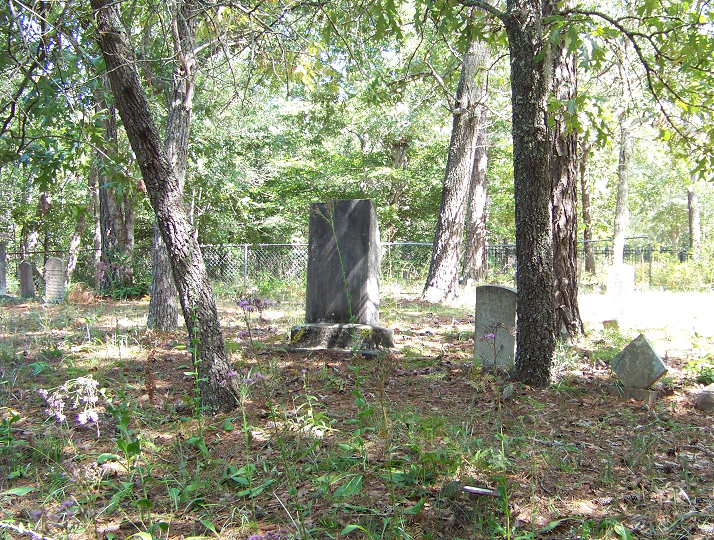
Yopps CemetaryYopp’s Meeting House is the oldest church in my town.  It is also the site of the only segregated cemetery in our little community.  It should come as no surprise that the “white” section covers about three-quarters of the cemetery.  It encompasses the front of the property,wraps around to the right and extends to the back.  The “black” section is located in the left rear corner.   It’s covered with shade trees and it’s the only place in the cemetery where you can hear the creek.

As I walked through the cemetery, I stopped periodically to read the headstones. 100_1118I found Charlotte in the segregated section.  She was about born in 1895 and died in 1905.  My first thought was to wonder what had happened to her. Had she been sick?  Was she the victim of a tragic accident?  My thoughts moved from how she died to how she lived…  I wondered about the little girl she must have been.  How did she fill her days?  Did she have a favorite doll?  Was she scared of the dark?  In my mind’s eye, I could see her, wearing a light blue dress, chasing a butterfly across a field, her laughter ringing in the air.


100_1125In the “white” section, I found E.A.R.’s headstone. Surrounded by markers much more eloquent, this stone squeezed at my heart.  Who was E?  Male or female?  What was he/she like?  I wondered at the family’s circumstances, marking their loved one’s grave with such a humble stone.  I imagined an old man, bent from long days toiling in the sun, lovingly preparing a marker for his spouse.

Cemeteries aren’t usually on my list of places to visit.  In fact, the only reason I stopped by today was to get pictures of tombstones.  My family is working on our Halloween decorations and part of our front yard will be a cemetery, complete with the Grim Reaper and an open coffin.  (I know, you’re breathing a sigh of relief that we aren’t neighbors!)   Anyway – there I was, intent on getting pictures of various stones when my muse did her thing…  Grave markers became people and those people had stories to tell!

So, where were you when inspiration struck?


Because Dreams Aren’t Enough

Life is choices. It’s that simple. It is the little choices we make each day that shape our lives. While we have different struggles and concerns, at the end of the day, we decide what actions we will take to overcome the obstacles before us.

Like many other writers, writing isn’t my day job. While I have a good job, it doesn’t feed my creative side. You might be able to relate. In a perfect world, I’d be sitting at my desk writing novels instead of typing log notes.

I was on Facebook the other day when I came across a video of Denzel Washington talking to a group of students. (Here’s the link if your interested in viewing: http://youtu.be/O0mUqEa7XnM ) He talked about dreams and goals, discipline and consistency.  These are some of the same things we’ve probably all said to our children – maybe not in the same words – but with the same intents.

I wondered why I haven’t been applying this to my dream of being a full-time writer.  And I think I know the answer – I lacked discipline.  The choices I was making reflected this.

WP_20140921_006I looked at my writing space. Unlike my desk at work, my “writing” area wasn’t  organized.  I had notes laying haphazardly around.  Nothing was easy to find.  This was a problem.  If I could stay organized for my day job, then certainly,  my dream job deserved the same level of professionalism.


My day job requires that I work from 8:00 am to 5:00 pm, five days a week, for a total of forty hours.  Like you, I come home, cook dinner and do a variety of other things. I might sit down and watch a television, maybe do a little social media stuff – stop by a google + community, spend a little time on twitter, etc. The thing is nothing was set in stone, not like my day job.  This was an area I needed to improve. I worked out a schedule that limited the amount of time I was being “social,” included a period for exercise, and allotted time to work on my WIP.

I decided I needed to set some goals in regards to my latest story:  things like a weekly word count and an estimated time to completion.  With a completion date selected, I’m more consistent with my writing because I’m focused on my goal.

So, this is what’s been going on with me.  I’m always looking for ideas for better utilizing my time.  If you have any tips, please feel free to share.