Lessons Learned

winnerI love winners.  I love underdogs.  I love losers when they don’t give up.  But I don’t love quitters. And that one thing – not wanting to be a quitter, not wanting to feel like a person who throws in the towel, has about wore me out.  It’s been two years since I published my first book.  Since then, I’ve worked on the sequel, written and published a novella and wrote another story.  But it’s that sequel that’s killing me. I think about the characters, how the story should go, what I want to happen.  It all sounds good in my head – and yet, when I sit down to write, I lose interest.

Other characters have popped in, wanting to tell their stories, and I told them to hold on.  It wasn’t their turn.  After a while, they stopped knocking on the door of my imagination.  And that’s sad.  It bothers me that I stubbornly clung to the idea that I had to do a trilogy – because that’s what YA writers do.  Those other stories, those other characters, are like smoke rising in the air.  How do you recapture those ideas?  Because it’s not like I haven’t tried.  I wrote down the ideas – I knew to do that much.  But going back a reading over those thoughts – I’m not finding the magic.

After so many hours working and reworking the sequel, I’ve got to admit it:

I’m a quitter!

Maybe one day, the story will flow.  But now is not that time.  I’m shelving the sequel.  I’m reclaiming the joy I had when I wrote the other stories.  It’s okay for me to put something aside when it becomes a burden.  And that is exactly what the sequel has become.  And it makes me sad to admit it.

But –

I’ve learned something important.

As a writer, I should have stayed true to my first instinct.

If I would have done that, then those other characters – their stories would have been told.

And –

I remembered something important.

Just because other people are jumping off bridges, doesn’t mean I have to.

If I would have worried less about what other writers were doing, I would have been satisfied with a stand-alone book.

The Tenacious, Courageous Writer

It takes courage to show your dreams toWhen we think of courage, we often think of people doing extraordinary things in dangerous situations. While that is certainly true, courage is also daring to follow your dreams, to face your fears and persevere.

Many of us (writers) are introverts by nature.  We are most comfortable in smaller groups and quite content being alone.  In fact, alone time isn’t just nice, it’s a necessity.  We seek out an empty room, sit behind our computer and type our hearts out.

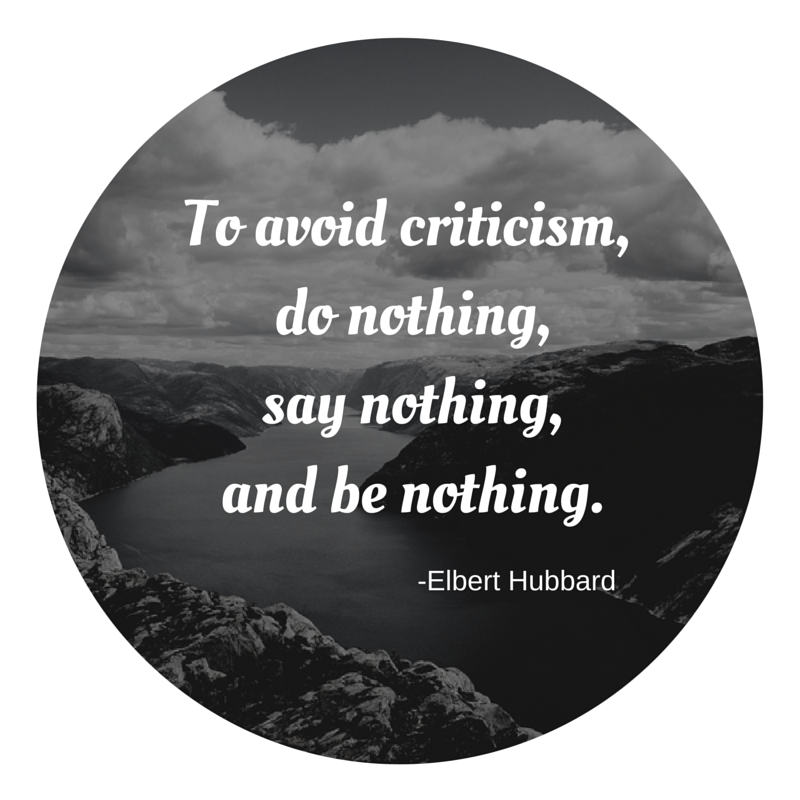
This is where courage comes in.  Whether we are blogging or working on a novel, we have to release our words, our thoughts, and ideas to the world.  We are literally exposing our inner-selves.criticism  That is scary.  There’s no invisible shield to protect us from the scrutiny of our readers.   Unfortunately, some of those readers aren’t going to like what we have to say – and that’s okay. What’s important is our reaction.  We must refuse to be intimidated.  We must be tenacious.  Writing is our art. It is the way we express ourselves.  It is as important as the air we breathe.


Body Language and Writing

Updated 08/16/15

Years ago, my family owned a small business. As any small business person will tell you, customer service is important. Not only did I try to meet our customers needs, I made sure to smile and say thank you. I engaged in small talk and stayed involved with community events.

Our customers were as varied as the products we sold. Most were likable but there were those couple of people who just didn’t make me feel all warm and toasty. I thought I’d managed to hide those feelings only to come to the realization I hadn’t been successful.

After paying for his purchase, the customer lingered, wanting to talk. At some point in the conversation he asked whether he smelled bad. I assured him that he didn’t. He then went on to ask why I kept backing away from him. The truth was that while he didn’t smell bad and there was a counter between us, I felt like my space was being invaded. While my words and facial expression (smile) said one thing, my body language (unconsciously moving away) told the truth of how I felt.

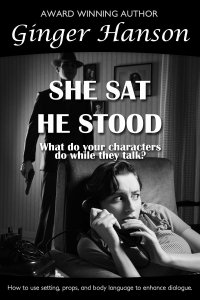
she sat he stoodI have been reading  She Sat He Stood: What Do Your Characters Do While They Talk? by Ginger Hanson.  She points out the importance of studying body language and how our subconscious actions can reveal our true feelings. We can apply this to knowledge when writing dialogue.  She also covers the use of settings and props. Having purchased several writers handbooks and being unable to finish reading them, I was pleasantly surprised to find I enjoyed this one.  Hanson offers a variety of helpful suggestions without putting the reader to sleep.

If you think you could use a little help with dialogue/body language, click the cover image. At only 99 cents, you can’t beat it!

If reading another writing advice book doesn’t appeal to you:

You might try watching old movies.   I find that black and white movies work quite well because there are less visual distractions.  Black & White Movie Nightwatch and learnMake sure to grab a pen and paper to take notes, otherwise, it becomes too easy to get lost in the film. Study the interaction between the actors.  She (feeling vulnerable) might turn away and hug herself.  He (feeling agitated) might lean on a balcony railing while taking a deep drag on his cigarette. The important thing is to recognize the actions the actors use to convey their characters’ feelings. This is ultimately what we as writers are trying to do – show not tell.

Have you stumbled across a tip or technique that has improved your writing?  If so, please share.


Help! Which Way Do I Go?

Fork in the roadI’ve come to that proverbial fork in the road and I don’t know which way to go.

When Of Dreams and Shadow: Forget Me Not (Book 1) was published in September 2013,  I immediately started work on the sequel.  But by January, 2014, Britney and Michael had popped in my head.  Their story took over and in July, 2014, The Reason’s Why (e-book) was published.   The paperback followed in September.   The Wretched Life of Maxine J Mattocks, a novelette, is being published in episodes on Wattpad and my blog.

My dilemma:

  • It is now December – 15 months since the first book was published.
  • I’ve written about 12,000 words of sequel.
  • Writing the sequel feels like a chore.
  • Part of me wants to stop working on it and maybe get a new cover for Dreams (taking off the Forget Me Not: Book 1)
  • The first book could have been a stand alone story.  At this point, I wish I had decided to do just that…

It’s frustrating. 

In the past, I’ve been a “pantzer”.   I like the spontaneity and the creative flow that happens between the characters and myself.   With the sequel, I decided to be a “planner” – to use an outline.  Is it possible that’s the problem? It didn’t seem so at the time.  In fact, I thought it was helping.   Maybe my problem has less to do with my writing process and more to do with my emotional connection to the story.  It’s not that I don’t love the characters.  It feels more like I’ve outgrown them – if that makes any sense at all.

Is it possible to rekindle the flame for Book 2?

writer's blockI know the importance of having sequels follow as quickly as possible especially with the whole marketing thing.  I get that I’m behind the power curve and honestly, that just adds on another layer of frustration.  And then, when I get the chance to write, I sit in front of my laptop – I type, delete, type, delete… It’s amazing that I’ve managed to move forward at all.

And then there’s other distractions…

Like the new characters who have stopped by to introduce themselves.  They want their stories told.  But the longer I ask them to hold on, the less often they visit and that worries me.

So now you know… 

When I talked to my husband about this, he got that “deer in the headlights” look.   I got a lot of hemming and hawing and nothing else.  And that is why I’ve turned to you – because maybe you’ve been in this same spot or know someone who has.  Even if you haven’t, maybe a fresh set of eyes can see the better path. Either way, your  thoughts and experiences would be so appreciated.

Putting the Pen Down

writerWriters write – even when they don’t feel like it – at least, that’s what they say…  (They being those people in the know.)

Confession:

I am not one of those writers.  In fact, I didn’t write a word on my WIP this past week.   This probably explains why writing isn’t my full-time job.  I wish I could say that I had been too busy – that life had thrown a wrench in my plans.  But the truth is – I just didn’t feel like writing.  My son came home for a couple of days.  I put in my 40 hours at work.   I read two novels.  I watched a little television.  I went shopping.  I told myself I needed to write but then I decided to clean the carpet instead.

I am that writer – the one who needed to put the pen down and take a break.

I love this time of year –  bonfires, Thanksgiving, Christmas, the music, etc.  But as much as I love it, I find myself quite emotional. Seriously, I cry over coffee commercials.   I think I become emotionally overloaded.

Add in the news and all its ugliness…  And you’ve got me – a writer who hasn’t been able to work on my current WIP.  Why? Because it seems real monsters emerged from the shadows this past week. Monsters that hurt children instead of protecting them.   And my story has its own monster.  I’ve got to finish the story of a murdering shadow.   I didn’t want to know his thoughts.  I didn’t want to put my heroine in jeopardy.  I didn’t want to spend anymore time in dark places.

Silly?  Maybe.

I’m hoping that as the new week starts, work on my WIP will, too.