Making Our Make-Believe Believable

I’ll admit it. As a child, I saw monsters in the bathroom and heard wild animals outside my bedroom window. I loved watching Scooby-Doo on Saturday mornings and as I laid in bed on Saturday night, I was sure that a goblin or witch was hiding in my closet or under the bed. Some might say I had an overactive imagination. Others might think I still do.

Imagination is the portal that carries us to other places – whether an imaginary realm, a fictional city, or a table at your favorite café. It introduces us to characters – knights, fairies, detectives, and the girl next door.

As writers, we want to tell stories that our readers will want to believe. Just as the laws of nature are constant in the real world, we must set rules and parameters for our fictional world and we must hold true to those rules. Those rules will serve as a sort of litmus test when considering the actions of our characters and the elements of the setting. It is the consistency of the story’s components that makes it work.

Character assessments are critical. Each writer has their own way of learning about the characters in their story. Some may draw character webs. Others may interview the characters. The important thing is to use the information as building blocks during development and as a reminder of the character’s attributes as the story progresses. For example: If I’m writing about a middle-aged woman named Rose who is an activist with the anti-gun lobby and the only witness to a mob hit, I’m probably not going to have her choose to carry a gun. Why? Because I’m not sure that’s believable. Would Rose be comfortable toting a Glock in her handbag? Would she know how to load the weapon? Or how to use it? Maybe not. However, I might give Rose a can of pepper spray. She may choose to wear a pair of good running shoes or hire a body-guard.

We can apply the same reasoning to our imaginary places. If the leaves of a great oak tree are purple then they should stay purple. If an ogre is immune to magic, than no matter how tempting, the ogre should stay immune.

By obeying the rules we’ve set, we enable our story to progress. Ignoring the rules will cause our stories to stray into the unbelievable.


The Author Platform and Blogging: Identifying My Readers

acorn 2Remember Scrat-the squirrel from Ice Age?  He was my favorite character…  Always trying to secure that nut. With all of his efforts, he didn’t seem to accomplish much.   He had the momentary satisfaction of thinking he’d succeeded only to realize his acquisition had slipped from his paws…

I was thinking about my author platform and the decisions I’ve made and realized I’m a bit like Scrat.  I’ve put forth a lot of effort but I’m not exactly where I want to be.  In other words, I haven’t secured my nut.

To be honest, I didn’t realize how much effort went into building an online presence.   If I had, I probably would have closed my laptop and called it a day.  Novel Notions was my first effort at blogging and to be honest, I liked it.  I’m not very tech savvy, but I figured out Blogger and was satisfied.  Then came a 2013 writers conference …  My blog wasn’t enough, I needed a website.  I needed a Facebook Author page,  a Pinterest page and a Twitter account.  Good grief!  Because working a full-time job, taking care of my family, and trying to squeeze in a little writing time wasn’t enough!  I needed to do MORE!

I went to work.  I got a website using GoDaddy.  I set up a Facebook author page (which I rarely update) and I kept blogging.  Slowly, I built a small following. After all that work, I thought I had my nut.  Only, I didn’t.

At a 2014 writers conference, it was suggested that WordPress was the way to go.  Using WordPress would allow me streamline and hopefully save a little time.  I thought long and hard about this because in essence, I would be starting over.   In April, I made the switch.  Only, I didn’t put much effort into posting. (I continued posting to Novel Notions even though I knew that blog would be ending.)   Crazy right?  Because I knew from experience, consistency mattered when it comes to building and maintaining a following. It’s taken me a while but I getting back into the swing of things.

Only, I’m not sure that I’m chasing after the right nut.   There are so many expert voices out there offering advice on building an author platform.

There is the thought:  Content is King.   Typically, I blog about things I’ve learned from my journey as a self published writer.  I might offer writing tips or an experience I had in marketing.  Only, this kind of content is more for fellow writers.  The readers of my books on the other hand, probably aren’t checking out my blog for writing advice.

This leads me to: Know Your Readers.  Are we referring to the readers of our blog? OR the readers of our books?  I’ve always assumed this pertained to my book readers and yet, my blog content is aimed at other writers.  And that’s the quandary in which I find myself.  A blog is supposed to be a plank in an author platform.  It is supposed to help build a following, which in turn, hopefully leads to more sales.  Yet, I only seem to be targeting other writers… (I realize other writers do buy our novels and that is wonderful but I don’t think they should be our target buying audience.)

I visited several blogs – and found that the majority was a lot like mine (though bigger and better established) – offering content regarding writing/marketing.  There were a few who focused on their books and their books only but I found those kinda boring.  If I had written a book on gardening, I could blog about bees and the latest cultivating techniques thus offering quality content and identifying my audience.  But I didn’t…  I write fiction and my readers are females ranging from teens to older adults.  (Yes, there are grandmothers who read YA fiction)  I don’t necessarily want to post pics of the latest “hottie” nor do I plan on offering fashion advice or dating tips…

On second thought:   My blog is just a part of my website.  Maybe my website that should be focused at my “book readers” and my blog should be focused on  my “blog readers?”   Maybe I just freaking over think things…

So I’m left wondering, what is the magic formula?  And where do I go to find it?   Because, I’m really wanting that nut!


Book Cover Deja Vu?

I recently downloaded a couple of YA novels.  Because they were located next to each other on my Kindle, they caught my attention. Is is just me or is there a resemblance?  While there are several differences, to my eye, the model appears to be the same.  Which got me thinking…  What’s the chance of other books having similar covers?

the faerie guardian             mindspeak

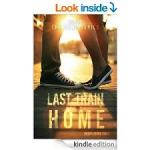
Seeing as how I didn’t know – I did a search and was surprised by what I found.  One of my favorite trilogies is the Home Series by Megan Nugen Isbell.  I liked her covers.  They were simple yet sweet and I thought they captured the mood of the stories.  It was the cover of Last Train Home that initially hooked my attention.

last train


love and other

But as I looked at the cover of Love and Other Unknown Variables, I realized that certain images must resonate with us.  What else can explain the fact that out of the thousands of stock images available cover designers are choosing some of the same ones.

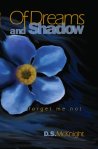
Of Dreams and Shadow, book cover With my first novel, Of Dreams and Shadow, I hired a graphic artist to design a custom cover.  Dreams is a young  adult paranormal novel.  I thought the artist did a wonderful job capturing the feel of the book with all the shadowy  swirling action.  That being said, I don’t think the cover says Young Adult and I can’t help but wonder whether a different cover would draw more readers.

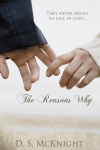
My second story, The Reasons Why, is a new adult novella.  I decided I wanted to use a different cover designer.  I  wanted a cover that said new adult/contemporary romance.  After searching the internet, I found exactly what I  was looking for – a cover that hinted at the longing my characters  felt.  Perfect!!

reasonswhy_500x750

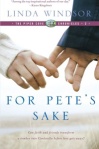
But apparently, I’m not the only author who was drawn to the image:


12a_sing-me-to-sleep                       12b_for-petes-sake

Was I surprised?  Absolutely.  Was I upset with my designer?  Absolutely not.   Like me, and obviously the other designers, she connected with the image.  She purchased that image and designed a cover that I ultimately bought.  And even though there are other book covers out there that share the same image as mine, I can’t imagine any other image capturing my story the way those two hands do.

Below you will find the links to two different websites.  Indie Book Launcher takes a decidedly custom cover position while Creativindie sides with the stock image folks.  As a writer, you will have to decide which option suits your needs.

http://www.indiebooklauncher.com/resources-diy/the-dangers-of-stock-photos-on-book-covers.php

http://www.creativindie.com/is-your-book-cover-designer-lazy-and-unethical-stock-photography-and-cover-clonescliches-again


Spicing Up Our Fiction With A Little Truth

officeThe phone rang.  I answered.

Caller:  (voice of an older man) Somebody from your office called me earlier.  Who called me and why?

Me:  I don’t know, sir.  If you give-  (I’m interrupted at this point)

Caller:  What do you mean you don’t know?  Does your office randomly call people for no reason?

Me:  No sir.  If you’ll give me your name-

Caller:  Hey You

Me:  Sir?

Caller:  That’s my name.  Hey You.  So why did your office call me?

Me:  (Rolling eyes) If you give me a last name besides You, I should be able to look your name up in our system.

Caller:  (Laughs)  You didn’t call me.  I’m just calling around trying to aggravate people.


It happened today.  True stuff.   And yes, I thought it was a tad bit creepy.  But that’s what made it interesting.  Things like this happen all the time.  We just have to remember to jot down these crazy occurances.    As much as we’d like to believe we won’t forget certain incidents, the fact is we very well may.  Trivial things can get buried beneath an avalanche of our daily doings.   By taking the time to record the event, we can reference it later.  After all, we never know when a story or character we’re working on could benefit from a little “truth.”


The Coffee House

tableI love those pictures of Paris—you know, the ones with the little tables outside of the bistro.   It just looks so…European and that probably explains my fascination with the Coffee House.  It’s become my Saturday morning ritual.  I sit at a little bistro table, nibble on a croissant, sip my coffee and watch the town-folk.

It’s amazing really—the things a person can see.   Just this morning, Bill (he looks like a Bill to me) ordered a latte and flirted shamelessly with the barista.  He leaned across the counter, lowered his voice, and slid a five dollar tip underneath her fingers.  The barista giggled, he laughed and I stifled the urge to clear my throat.

I walked to my favorite table and I noticed Bill was seated close by.  As was my custom, I decided to invent a life for Bill.  I imagined he was a successful surgeon, who at any moment would receive an urgent call, prompting him to abandon his morning coffee and hurry to the hospital.  Of course, being a world-renowned surgeon left little time for a social life, which in turn, explained his attraction to the young barista.  Surrounded by such intense pressure, pulling patients back from the brink of death—the barista’s youth must have been intoxicating…

Except that wasn’t the truth.

I watched as she approached Bill’s table, pushing a stroller.  I couldn’t hear what she said as she bent down, placing a quick kiss on his check but Bill looked resigned.  Hmmm.  Obviously, she is Bill’s wife.  I think I’ll call her Natalie.  Natalie could use a fashion pointer or two—like the importance of brushing her hair.

I glance back at Bill.  Gone is the flirt.  He’s now deflated, slumping in his chair, a hand on the stroller.  It’s sad really, the things you can learn by just watching the people around you.  Very sad indeed.  I look at Bill and wonder if he wishes he was a surgeon.